Full Replacement vs. Targeted Repairs
Not every siding problem means residing the whole house. The right call depends on how far the damage has spread and what is behind it.
Repair makes sense when damage is isolated — a few cracked or storm-damaged boards, one soft spot caught early — and the rest of the siding is sound. If the product is still available and the existing color has not faded too far, a repair can blend well.
Replacement makes sense when damage is widespread: rot across multiple elevations, boards the manufacturer no longer makes, fading too far gone to match, or storm damage that hit every side of the house. At that point, patching becomes a holding pattern rather than a fix.
Our free estimate shows you both options when it is a close call, with honest pricing for each.
Why James Hardie Fiber Cement
The siding we install is James Hardie fiber cement — HardiePlank lap siding, and that is the only siding product we install. Fiber cement is a mix of cement, sand, and cellulose fiber, pressed into boards that look like wood but behave very differently.
What it resists
Gulf Coast humidity rots wood siding and feeds termites; fiber cement resists both, along with fire. It holds paint far longer than wood, stands up to hail better than thin alternatives, and has a solid feel you notice the first time you knock on it. In Sugar Land’s climate — long wet seasons, hard sun, the occasional hailstorm — those are the properties that matter.
The honest tradeoffs
Fiber cement costs more than budget siding options, and that is real money on a whole house. It is also heavier, which means installation takes longer — cutting, handling, and fastening every board properly is slower work. And it has to be installed right: correct flashing, proper clearances above grade and rooflines, and painting and caulking to the manufacturer’s spec. Done wrong, even the best board underperforms. We install it the way James Hardie intends it to be installed.
Recent James Hardie Work
Real repairs from recent jobs — damaged boards out, new James Hardie fiber-cement boards in. Every repair below is our own work.
Board replacement, start to finish
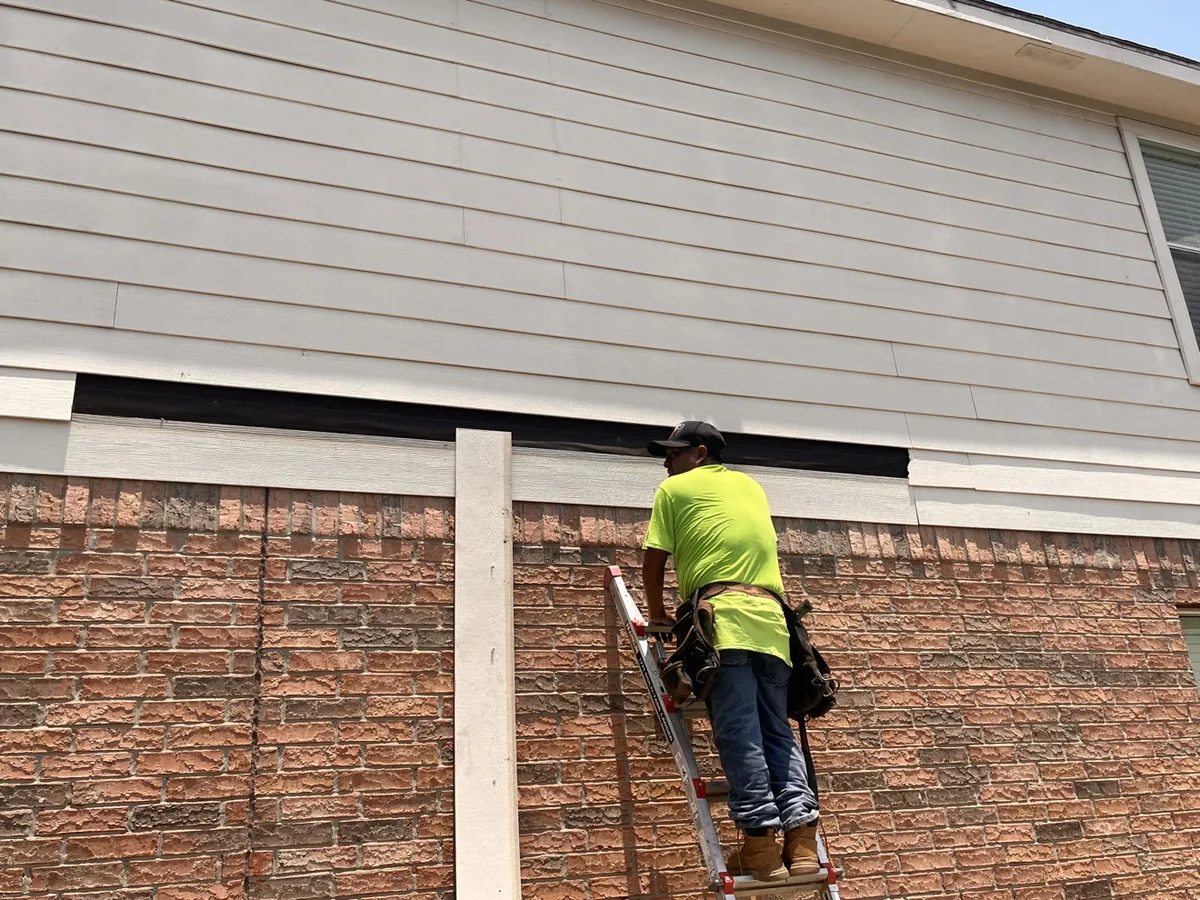
Step 1: damaged boards removed; weather barrier checked underneath.
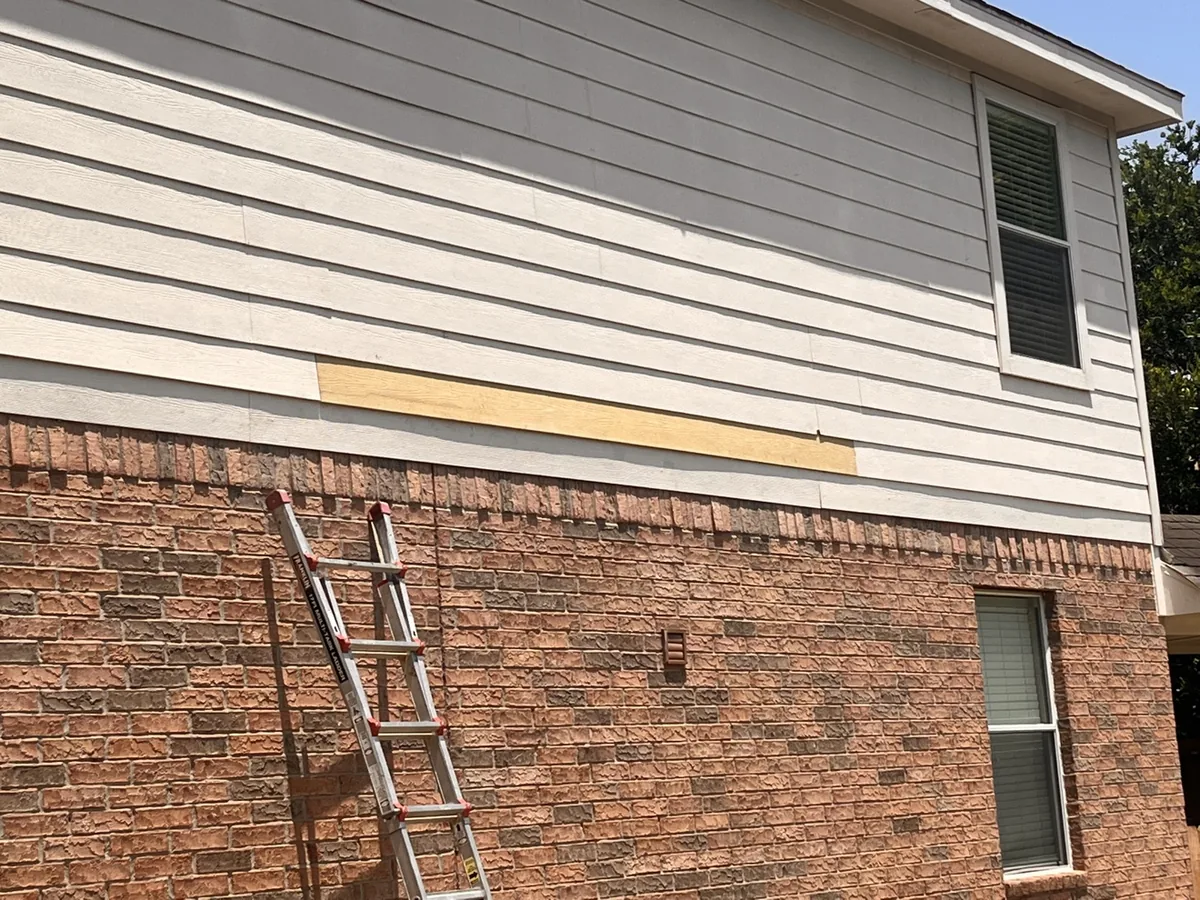
Step 2: new James Hardie board installed.
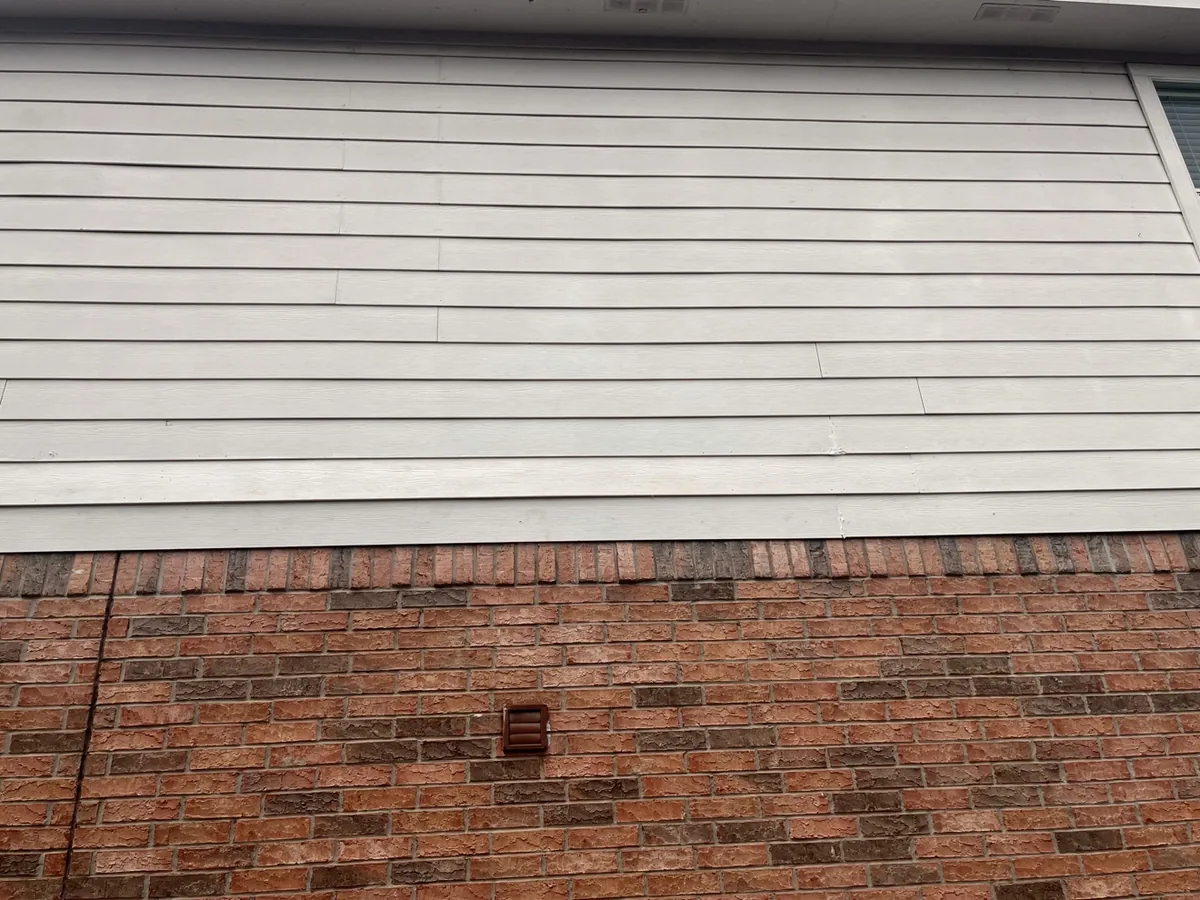
Step 3: painted and blended — the repair disappears.
Damaged section, repaired
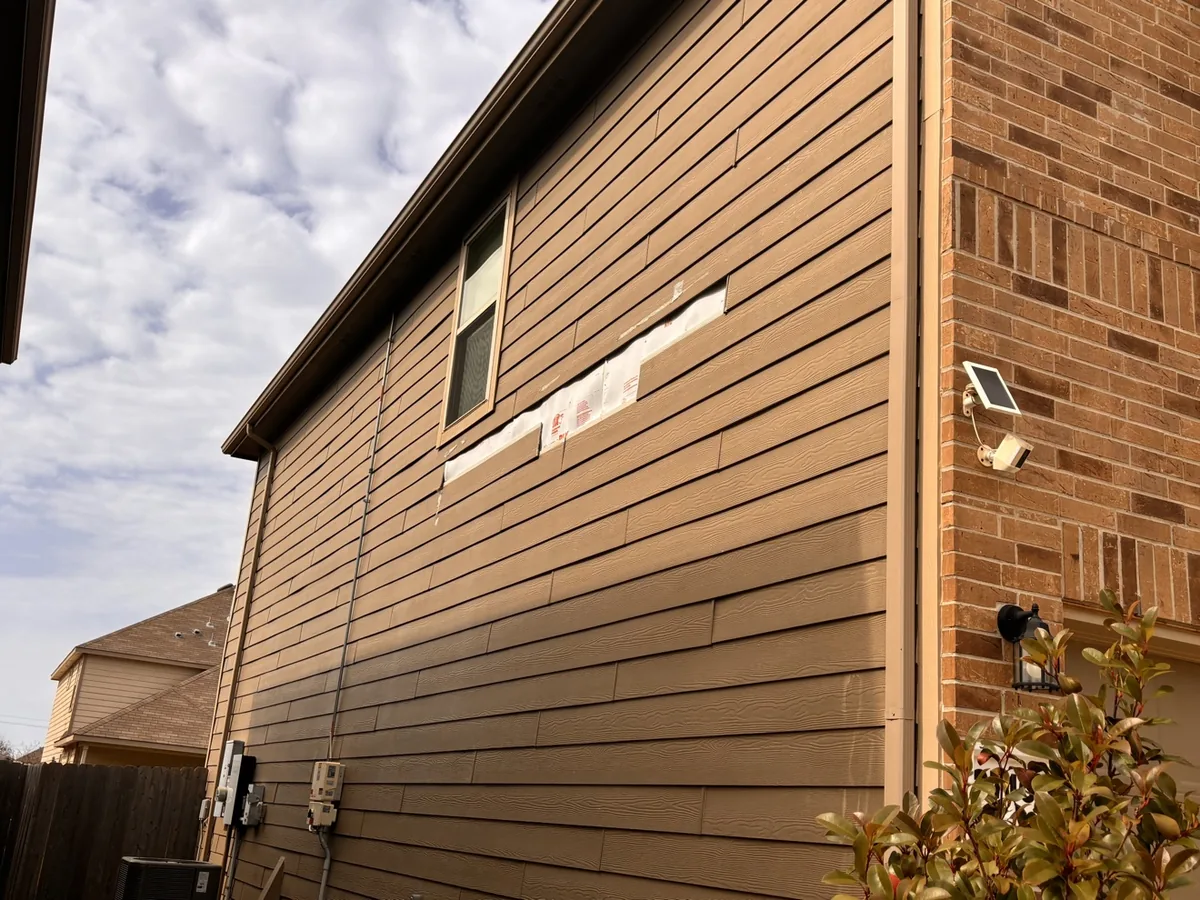
Before: damaged boards with the weather barrier exposed.
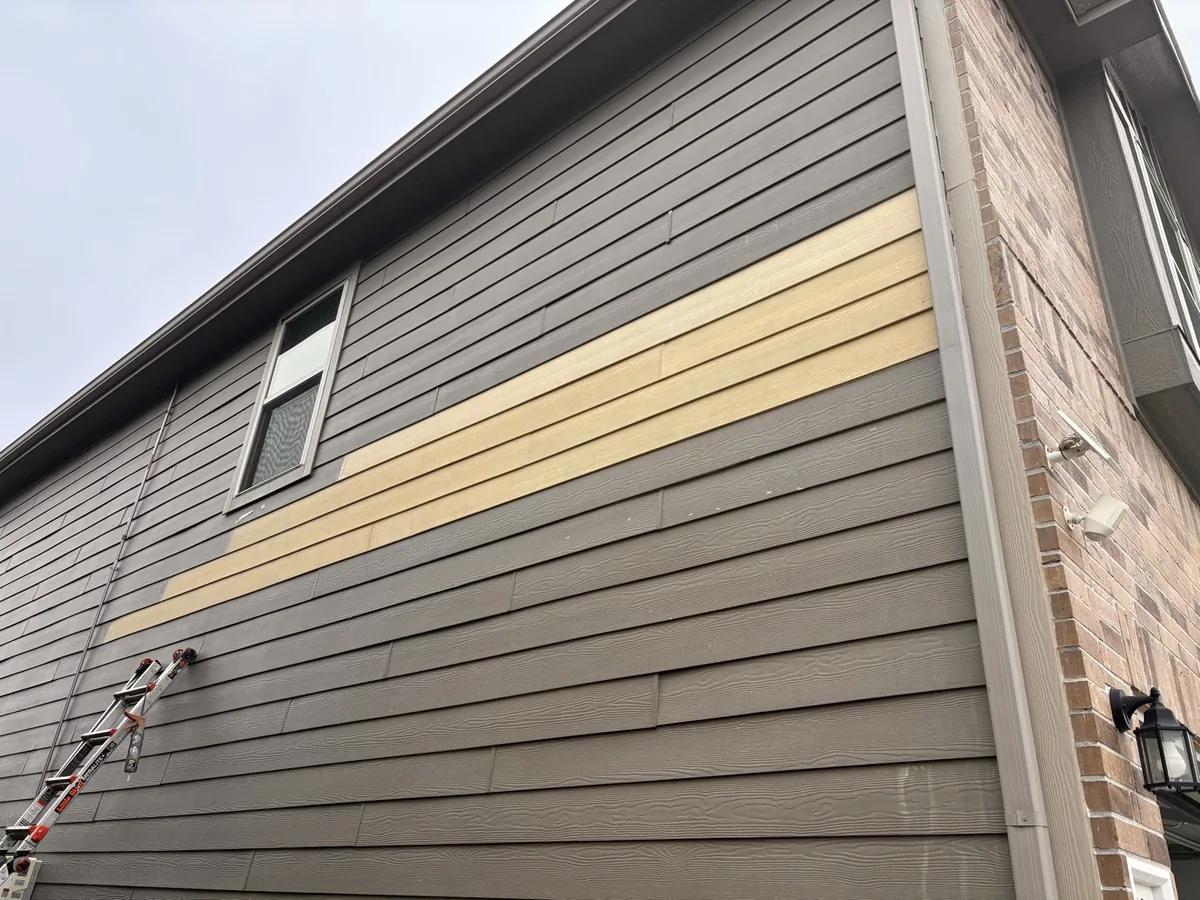
After: new James Hardie boards installed, ready for paint.
Signs Your Siding Needs Attention
- Cracks, chips, or holes — impact damage or age, and every opening is a path for water.
- Warping, buckling, or loose boards — often moisture behind the siding or failed fastening.
- Fading that no longer cleans up — UV has broken down the finish; paint or replacement is next.
- Rot or soft areas — press gently with a screwdriver; if it gives, water has been getting in.
- Indoor moisture near exterior walls — stains or musty smells on inside walls can trace back to failed siding or flashing outside.
- Hail dents or cracks — after a hailstorm, walk the elevations and look closely; damage is easy to miss from the driveway.
Storm Damage to Siding
Hail cracks fiber cement and knocks the finish off; wind drives rain behind loosened boards and tears at trim. After a storm we document what we find with photos — cracked boards, compromised flashing, water entry points — and help organize it for an insurance claim. As with roofing, the insurer makes the approval decision; our job is to make the damage clear and the repair scope honest.
Why a Roofing Company for Siding
A surprising share of siding problems are actually water problems that start at the roof: failed step flashing where the roof meets a wall, overflowing gutters soaking the siding below, or wind-driven rain finding the roofline transition. A siding-only contractor fixes the wall; we evaluate the whole exterior transition — roof, flashing, gutters, and siding together — so the repair addresses the cause, not just the symptom.
It also works the other way: if your roof and siding are both aging, coordinating the work means flashing and transitions get done once, done right, instead of twice.
Warranties That Transfer
Siding repairs carry our 2-year labor warranty; full siding installations carry our 5-year labor warranty. Both are written and both transfer to the next owner if you sell — a real selling point in a Fort Bend County market where buyers ask about the exterior.